Again, I fell off the wagon. This time, COVID-19 is the culprit. I’ll talk a little more about that pesky pathogen in one or two blog posts. For now, I wanted to document my “rural week” experience in Kirinyaga County.
Considering that 90% of my study abroad experience occurs in an urban, metropolitan city, my program made it a point to emphasize the experience of living in rural Kenya. Based on my rural week experience, I have definitely come out of it with a few questions about what it even means to be “rural.” We’ll come back to this though.
About two hours north of Nairobi in Kenya’s Central Province, Kirinyaga County is in the Mt.Kenya Region. It is also the Kikuyu people’s ancestral homelands. Now the Kikuyu are the largest ethnic group in Kenya. I’d say they play an important role in Kenya’s history as the Mau Mau was dominated by the Kikuyu, Jomo Kenyatta himself was Kikuyu, and now baby Jomo aka Uhuru (but not really) is also Kikuyu.
I was torn going into this rural experience. On the one hand, I had my own perspective on “rural” and on the other, I didn’t really know what to expect. I suppose my biggest concerns regarding a rural experience would be the issue of sanitation, access to piped water in particular. My time in Africa thus far has shown me that things such as clean water and consistent electricity can be hard to come by. I knew that I obviously wouldn’t expect a very “urban” infrastructure like I had seen in Nairobi. Apart from these anxieties, I’d say I had a pretty open mind.
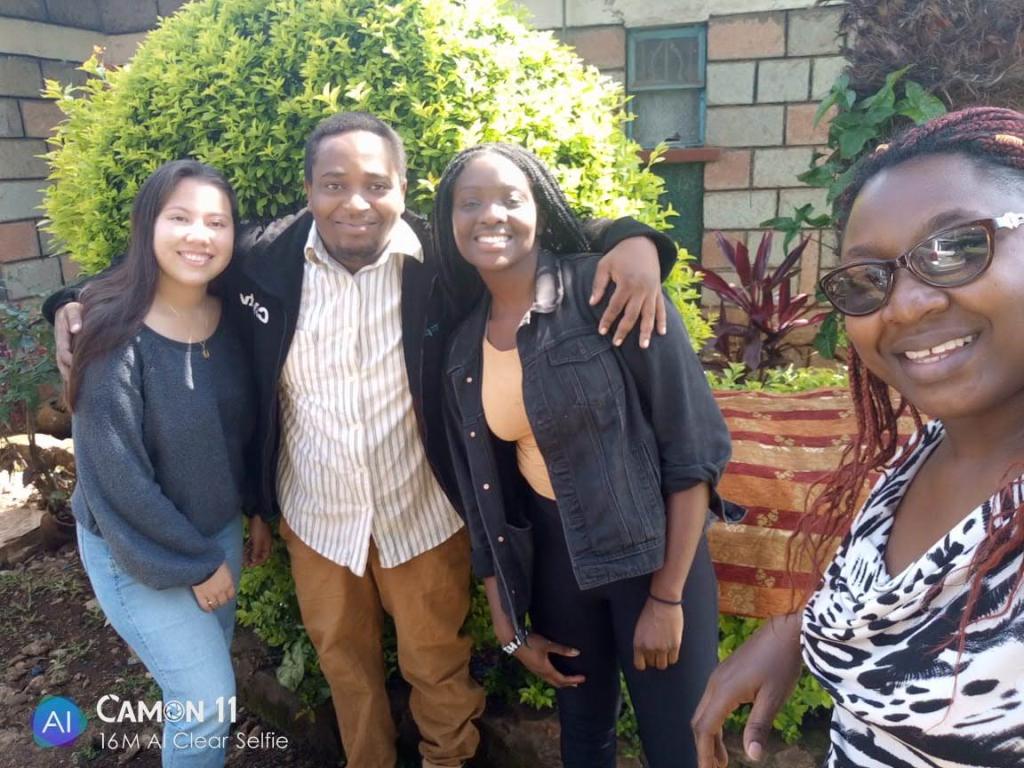
On March 2nd, around midday, we arrived at the Roswam Hotel, where our program had a nice lunch and met our host families. A classmate and I were paired with a wonderful family that I would soon come to love. Our host mother, Ann, was a teacher at a boys school in town. Our host brother Geoff, was in his late twenties, had two kids, and would also be our translator for our health survey that we were to conduct. Lucy was Geoff’s wife, and who I would refer to as our caretaker for the next four days.
After lunch at the hotel, Geoff took us to our home for the next few days. Now Kirinyaga County is very green. Given that agriculture is a critical sector in this area of Kenya, producing bananas, rice, maize, and other staples, this came as no surprise. Throughout the week I found myself marveling at the banana trees alongside the road, and how rich the soil everywhere was. Talk about fertile land.
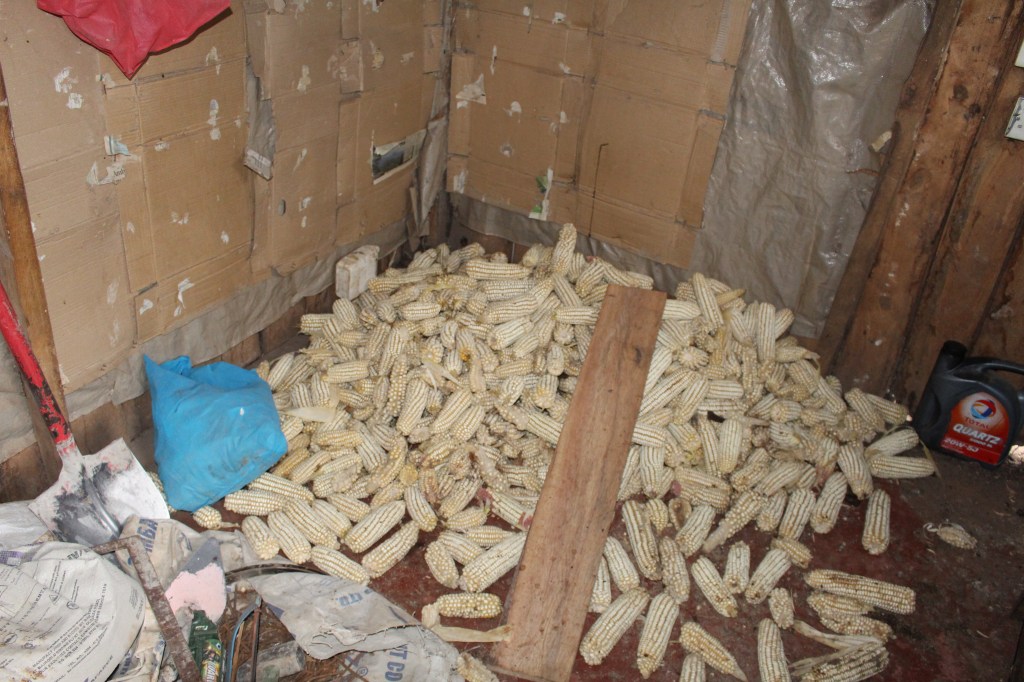
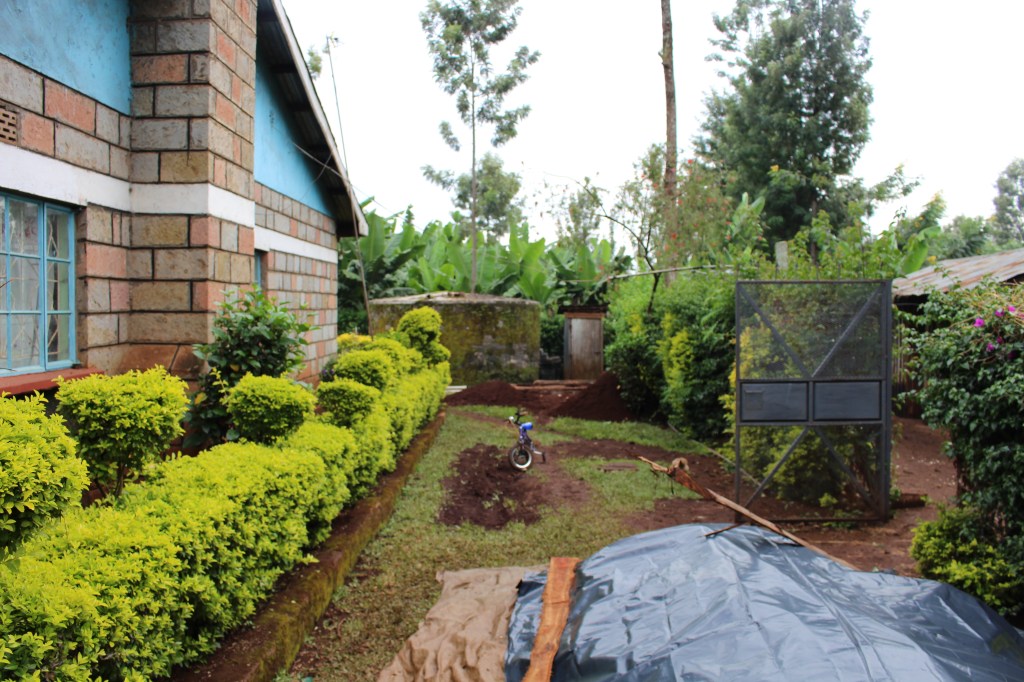
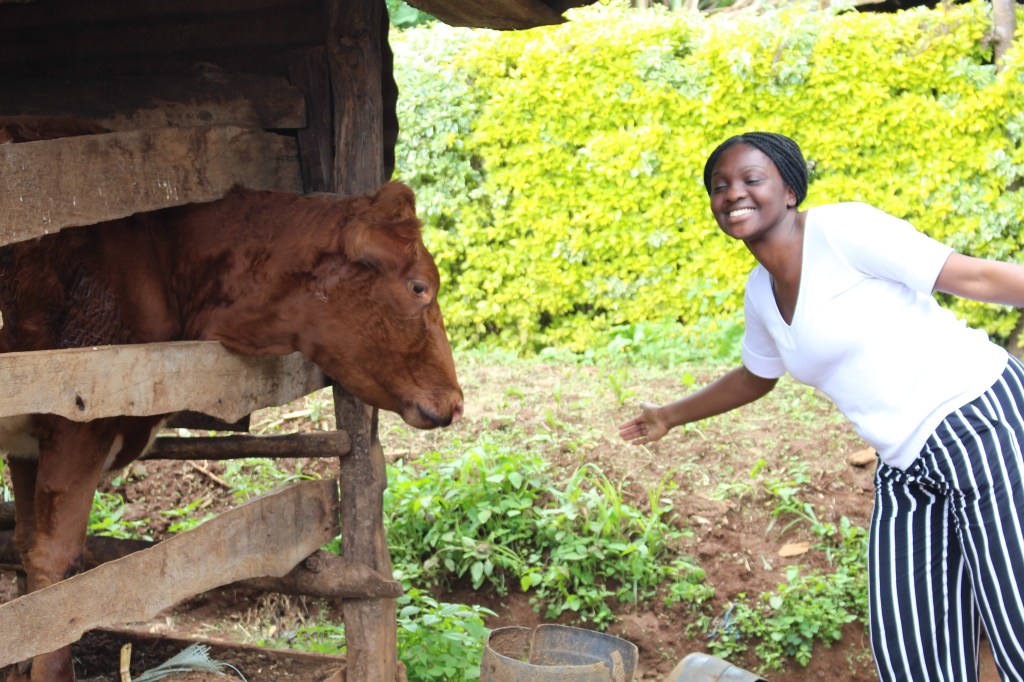
Now when Geoff made a sudden turn off of the main road into what looked like miles of grassland, I will say I was a bit confused. Our family, much like many families in this part of the country, all lived like this. One minute you’d find yourself on a road that goes on for miles, the next minute you’re traveling down a dirt road into a grassy oblivion. After a few turns and honks down some dirt roads, we arrived at a large black gate. Oh, the motifs of Africa, where large elaborate gates separate the outside world from people’s properties. Their house was a beautiful, one floored home with a few rooms, and all the other things you’d find in a house. They had a shamba (farm) in their backyard, and about 30 or 40 chickens. Let’s just say playing with the chickens was a highlight of my week.
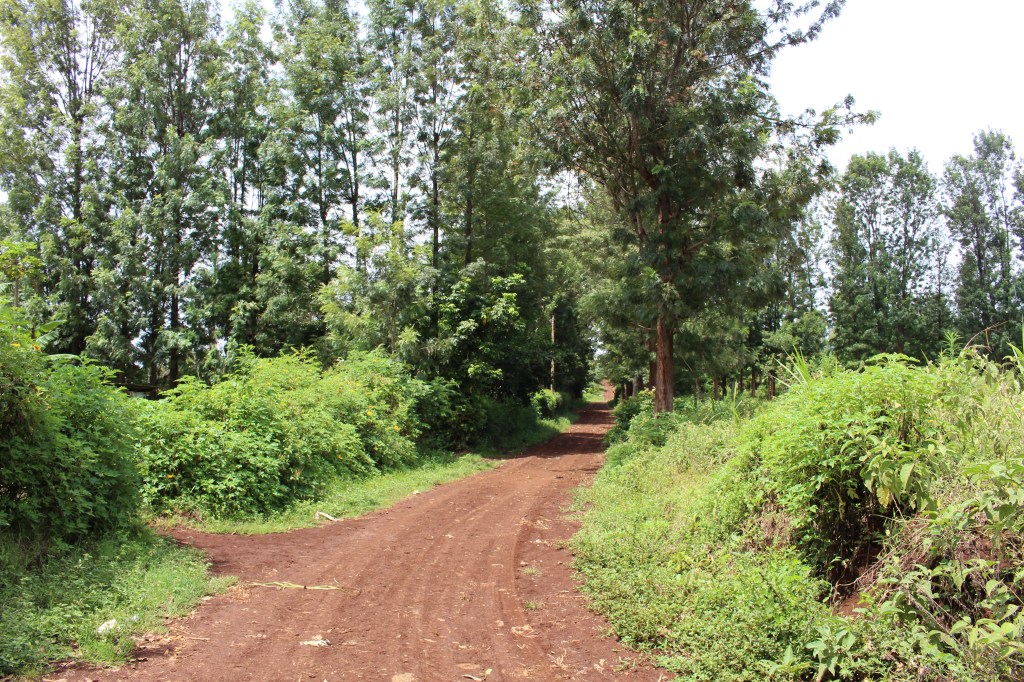
This is what I mean by dirt road. 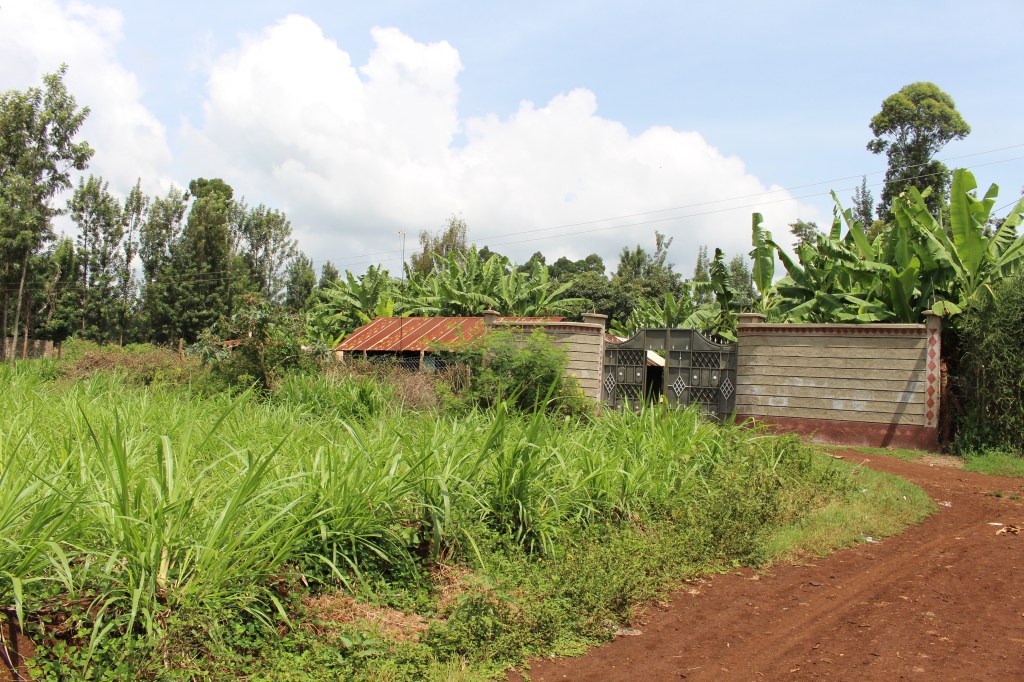
Those elaborate gates I spoke of.
The first day was relatively lax. I ended up napping a majority of the day and just hanging around. I mentioned that my host brother had two adorable sons named Liam and Nick. Although they weren’t huge fans of us at first, they eventually warmed up to us as the week went on.
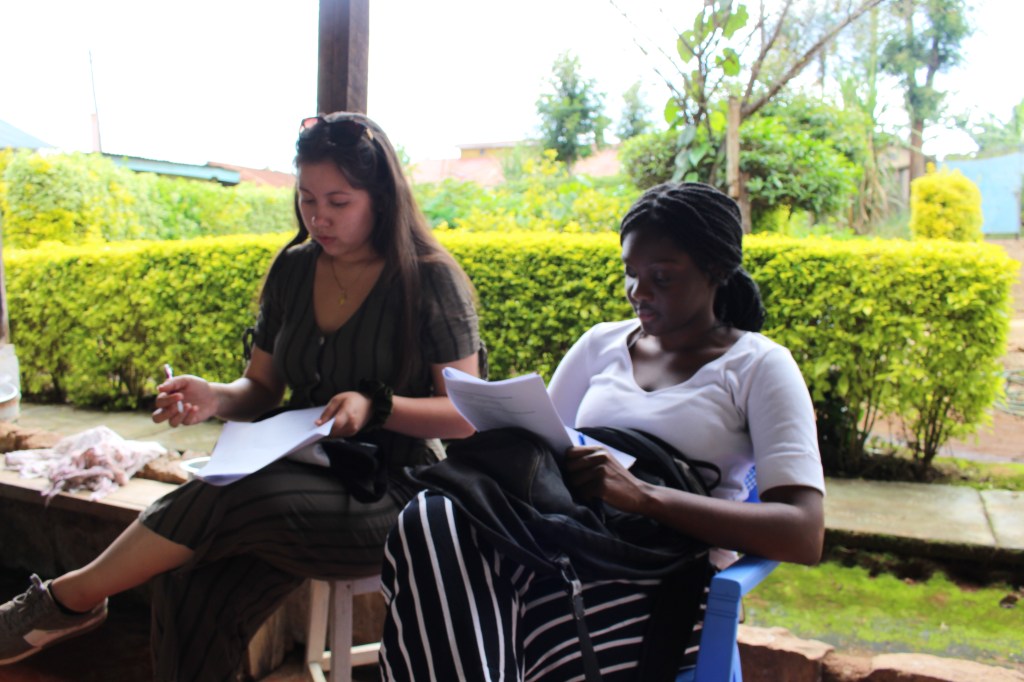
My time in Kirinyaga was one of relaxation and nutritional abundance. I found myself going to bed by 10:30 pm after eating pounds of rice, different assortments of bean stews, and chapati. Lucy really threw down and kept my stomach full. I wish I would’ve taken photos of the meals I ate. It was just what I needed after having to self-nourish on eggs, beans, and Chicken-Inn in Nairobi. Our days were spent working on our community health project and surveying people. Although I strongly detested that class, the survey was a great way to see more of Kerugoya town and interact with locals. We got to visit the County Headquarters where administrative matters are dealt with, a bank in town, and a girls boarding school, to name a few. Geoff was also nice enough to take us to the next county over where we visited a waterfall.
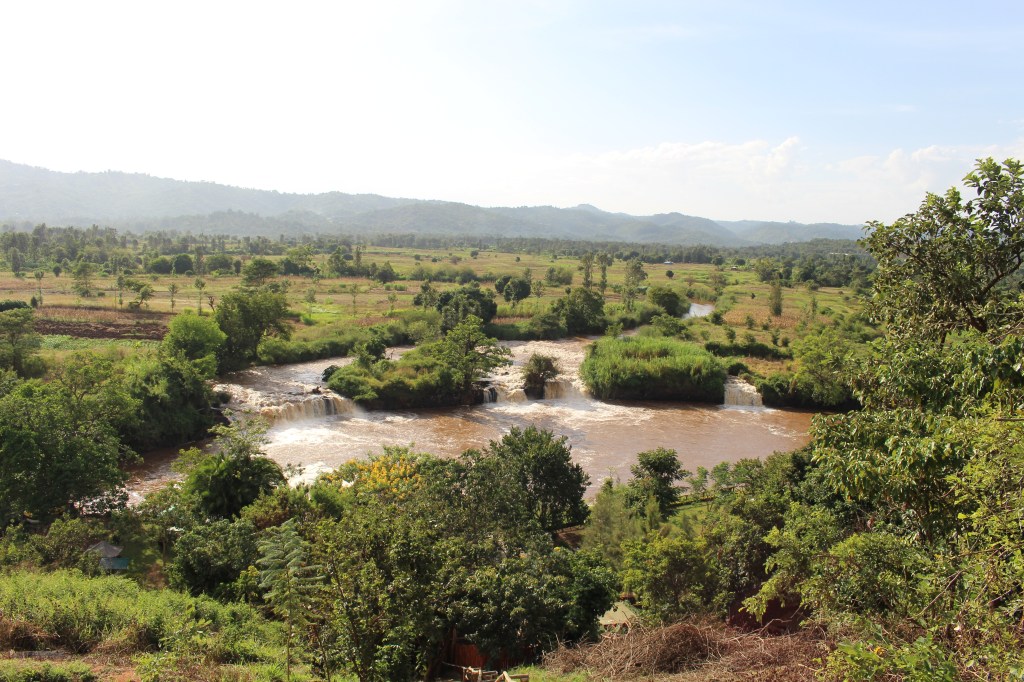
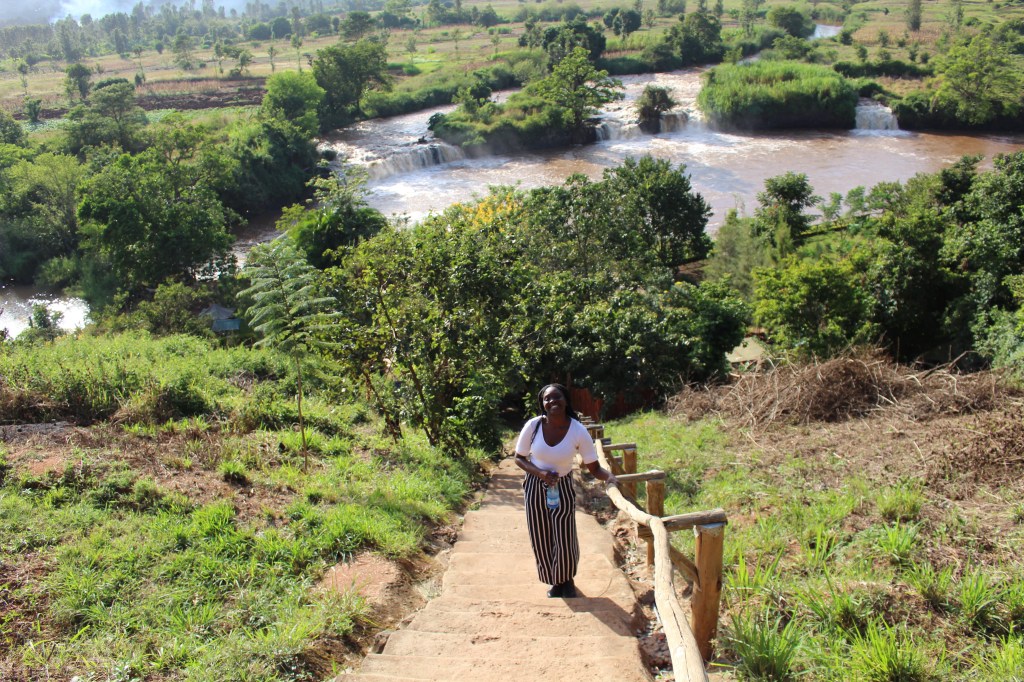
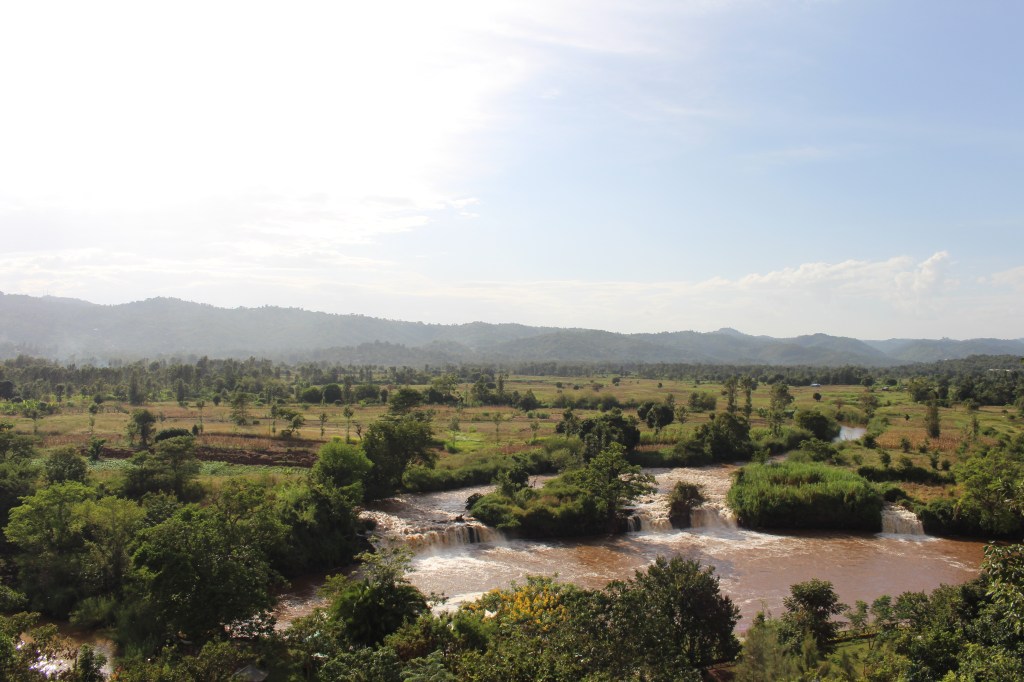
Like I said, it really was a relaxing few days. As I didn’t want to waste the data on my phone, I took the week off a social media, turning to reading, journaling, and blogging instead. Although Nairobi now has a special place in my heart, I can’t deny that the city is overwhelming. It was nice to get away from the traffic, the construction, and people always on the move.
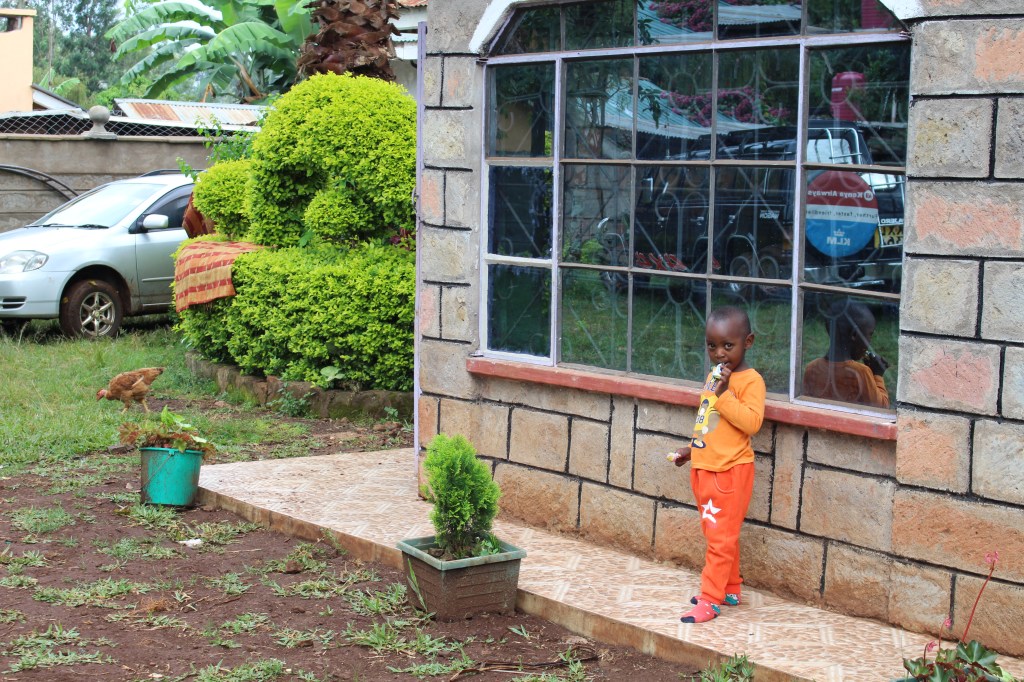
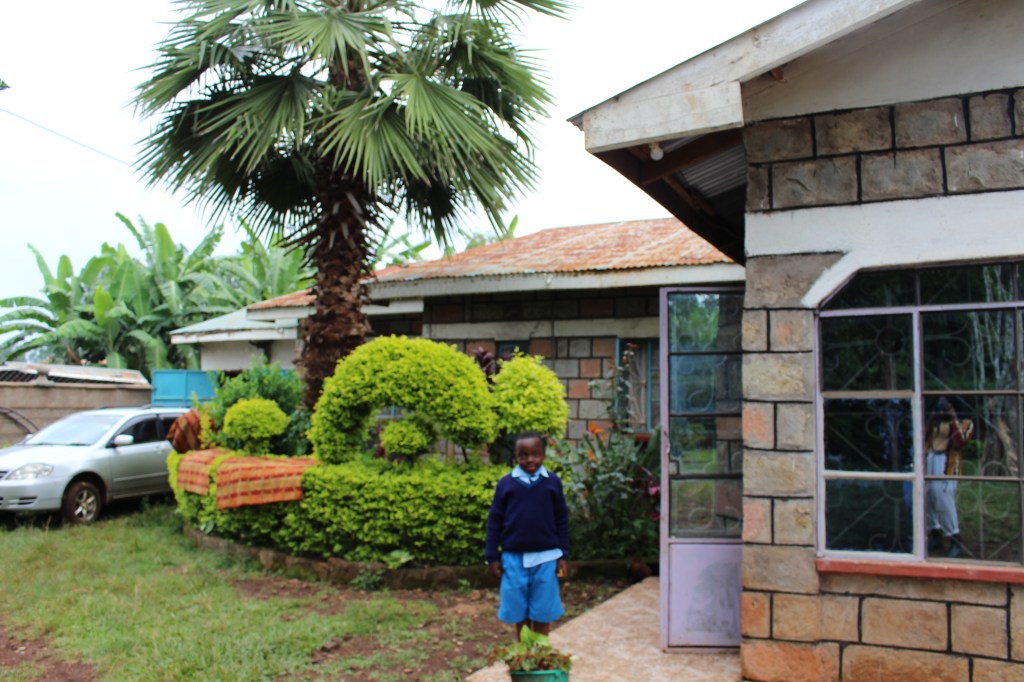
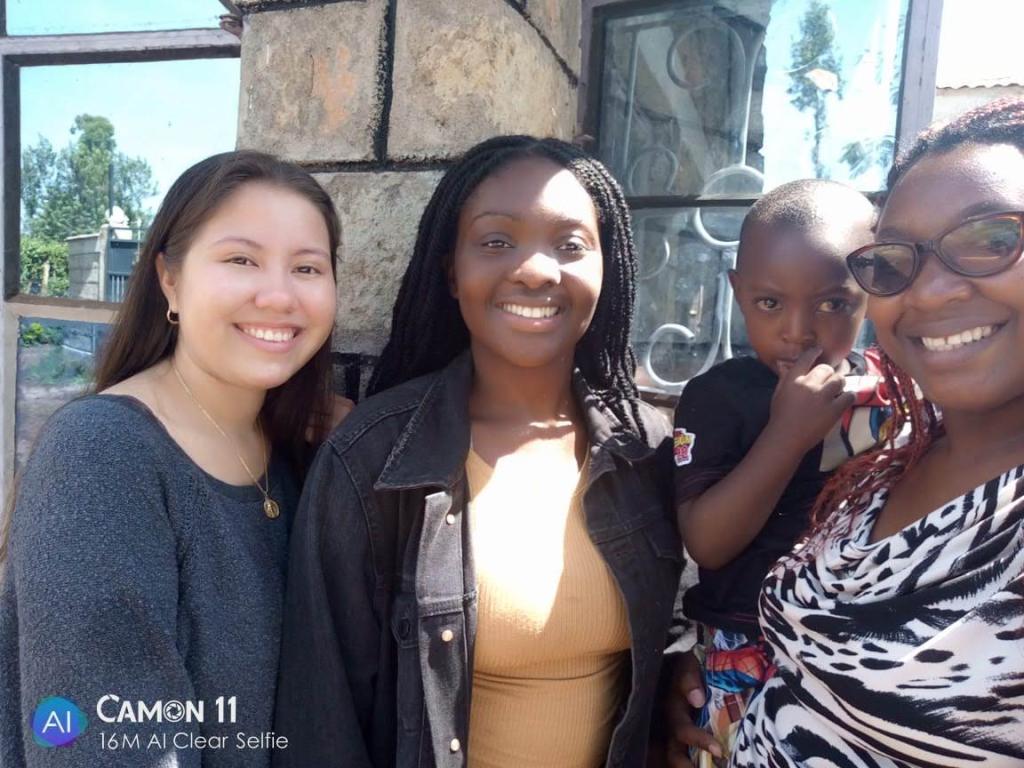
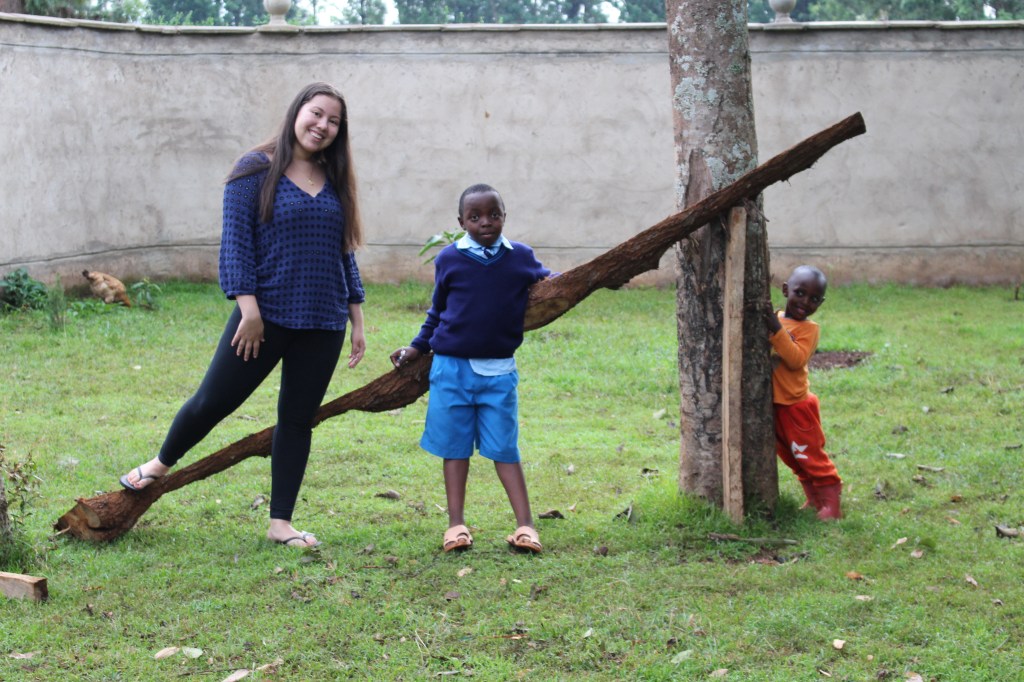
One of my favorite parts about being in Kirinyaga was having little brothers! The boys eventually warmed up to me and became my little buddies. Nick, who is six years old became my Swahili teacher and chapati smuggler. The baby, Liam, would eventually become attached to my hip, bothering me as I tried to read, and beating me up as I tried to nap, lol. Given that the urban homestay option was no longer a component of the study abroad experience, it was nice to be in Kenya and actually live with Kenyans. It’s also nice to be with kids….for a short while.

I will say the only adjustment of Kirinyaga was the sanitation situation, as I predicted. But honestly, it could have been a lot worse. My host family was actually one of the privileged families to have access to piped water. They had a perfectly functioning shower that spat out very hot water, and a squat toilet that flushed! I was very amazed by the latter because those squat toilets will really have you counting your sanitation blessings. On the topic of hand washing, I did find this to be a bit difficult as the sink dedicated to this behavior was unfortunately malfunctioning. I found myself having to go into the shower to wash my hands, as I didn’t want to disrupt Lucy in the kitchen.
Prior to moving in with our host families, our program had given us trash bags for our personal waste. This really came in handy considering that mother nature was coincidentally in town. But I also noticed some interesting things about the amount of waste my host family produced. Most of the waste produced was generally food scraps from cooking. This made sense, however, as packaged foods such as little snacks, etc. were not really present. All of the food we ate was extremely fresh and required very little packaging.
Kirinyaga reminded me a lot of Gambia which had me thinking a lot. The overall landscape of the town and my little snake shaped country were shockingly similar. I never really considered Gambia a rural country (even though I guess it actually is) before this experience. Having the privilege to travel to African countries with very urban populations, however is steadily changing my conceptualization of the urban-rural divide.
Welp, that’s all for this blog post. I really enjoyed my “rural week” experience and wanted to make sure it was documented. Enjoy a few more photos below!
 the final sixteen